
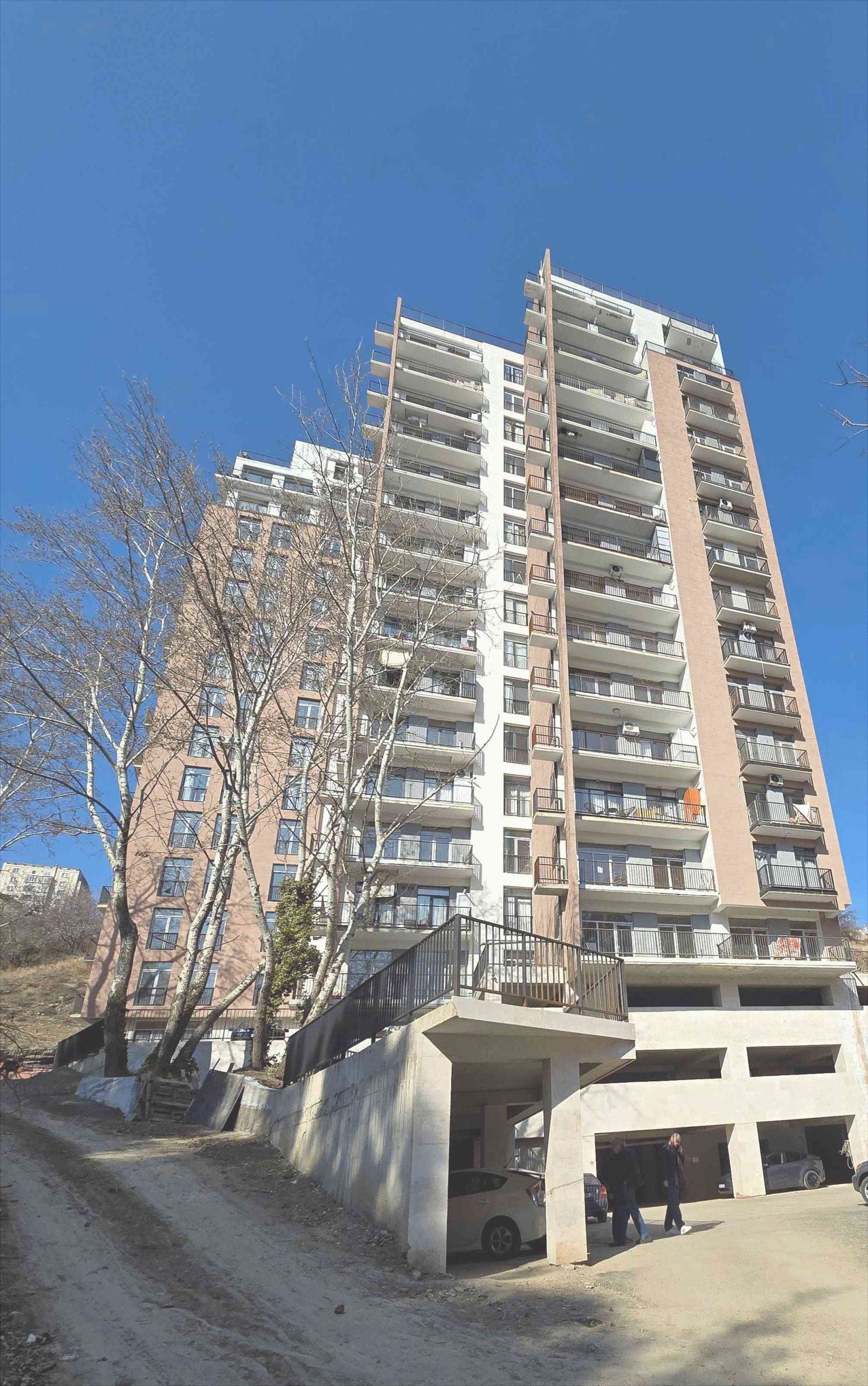
Recent data from June 2025 points to a measurable acceleration in construction activity across Tbilisi. In a single month, 697 construction permits were issued citywide—approximately 17% more than in the same period last year. This figure confirms that construction remains one of the most active sectors of the local economy and continues to shape how residential and commercial real estate is being supplied.
For context, 1,282 construction permits were issued during the whole of 2024. At the current pace, 2025 is on track to exceed that total well before year-end. While this growth signals confidence among developers, it also introduces new variables for buyers, particularly regarding neighborhood saturation, infrastructure pressure, and long-term livability.
Where Construction Is Concentrating in 2025
Looking at permit distribution by district reveals that development in Tbilisi is no longer concentrated exclusively in the traditional central areas. Instead, construction is spreading across multiple zones, each with its own logic and risk profile.
Isani (23%)
Isani currently accounts for the largest share of permits. Development here is largely residential, combined with new mid-scale business centers. From a buyer’s perspective, Isani represents a transitional area: prices remain lower than in Vake or Saburtalo, but demand is still driven mainly by long-term residents rather than tourism. Rental strategies here tend to favor long-term tenants, not short stays.
Didi Dighomi (18%)
Didi Dighomi’s growth reflects a different dynamic. Large plots acquired years ago allow developers to construct higher-density, more affordable housing. While transport links have improved, peak-hour congestion remains a real limitation. Buyers considering Didi Dighomi should evaluate access times carefully and verify whether promised infrastructure improvements are actually scheduled or merely conceptual.
Saburtalo (16%)
Saburtalo continues to grow in both residential and commercial segments. However, new construction here often replaces smaller buildings with taller structures, increasing pressure on already congested roads. While still considered a central node, Saburtalo’s appeal now varies strongly by micro-location. Proximity to universities, for example, affects noise levels, rental profile, and long-term desirability.
Gldani (14%)
Historically known for Soviet-era high-rise blocks, Gldani is entering a new phase of vertical development. New towers are appearing alongside aging infrastructure. From a buyer-side evaluation standpoint, this combination requires careful assessment of utility capacity, building management, and shared systems, which are often overlooked during initial viewings.
Krtsanisi (11%)
Krtsanisi has seen a noticeable increase in high-end and luxury residential projects. While marketed as a premium area, buyers should be aware that “luxury” in Georgia is not a regulated category. Quality varies significantly between developers, making on-site evaluation and comparison essential before committing to higher price points.
Didube (7%)
Didube is gradually shifting from an industrial and logistics zone into a mixed-use district. This transformation creates opportunities but also uncertainty. Noise, traffic, and transitional land use can affect livability. Buyers here should treat projected appreciation as speculative, not guaranteed.
Other districts (9%)
The remaining permits are spread across peripheral zones, indicating a broader geographic diversification. While this reduces pressure on the center, it also means that buyers must evaluate each area individually rather than relying on city-wide trends.
What This Means for Buyers
The distribution of permits confirms that Tbilisi is evolving into a multi-nodal city, rather than expanding uniformly from the center outward. This shift creates opportunities, but it also increases complexity for buyers.
Key practical questions arise:
-
Will transport infrastructure keep pace with new density?
-
Are drainage, utilities, and access roads adequately planned or already overloaded?
-
How will environmental factors—air circulation, green space, noise—change as density increases?
These are not abstract planning concerns. They directly affect daily living conditions, resale value, and rental demand.
Why Permit Growth Increases the Importance of Independent Viewings
Rapid construction activity does not automatically translate into quality housing. In Georgia, building standards vary widely, and enforcement is inconsistent. A higher number of permits increases the likelihood of:
-
Fast-tracked projects
-
Cost-driven material choices
-
Uneven execution between buildings in the same area
For buyers, this makes independent property viewing and condition assessment more relevant, not less. Observing real conditions on-site—layout, exposure, surrounding construction, noise sources, access routes—often reveals issues that permit data and marketing materials cannot.
A Market in Transition
The increase in construction permits in 2025 signals that Tbilisi is still in transition, not at a mature equilibrium. Growth is real, but so are the trade-offs. Buyers who rely solely on macro statistics risk missing local constraints that only become visible at street level.
As development continues, informed decisions will increasingly depend on neighborhood-specific analysis and on-site evaluation, rather than city-wide averages. In this environment, separating genuine opportunity from short-term oversupply requires attention to detail—and a realistic understanding of how Tbilisi actually functions on the ground.