
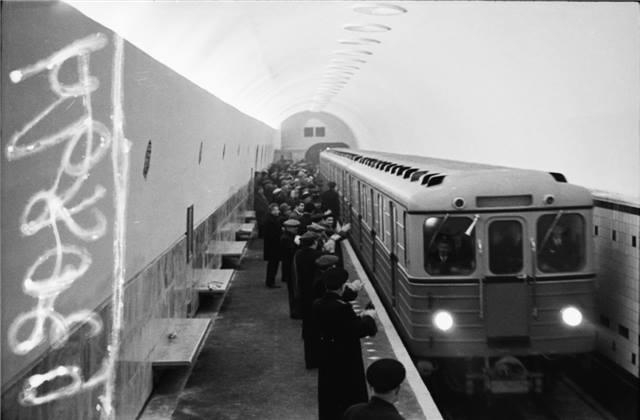
Urban development in Tbilisi is increasingly shaped by large-scale infrastructure decisions rather than isolated private construction projects. Among these, metro expansion plays a decisive role in determining which districts attract sustained investment and which remain speculative. Recent developments related to the planned extension of Metro Line 1 toward Gldani and Varketili provide a concrete example of how transport infrastructure and real estate dynamics intersect in Georgia’s capital.
For buyers and investors, understanding this relationship is essential. Construction permits alone do not guarantee long-term value. Accessibility, mobility, and integration into the city’s transport network are often stronger predictors of neighborhood resilience than marketing narratives or short-term price growth.
The Gldani–Varketili Metro Extension: What Is Actually Planned
In 2025, the Tbilisi Transport Company relaunched an international market survey to assess the cost and feasibility of extending Metro Line 1 by a total of 5.2 kilometers, split between two directions:
-
2.2 km toward Gldani
-
3 km toward Varketili
The project includes the construction of two new stations, tunnels, station vestibules, escalator tunnels, passenger platforms, and all related infrastructure compatible with five-car metro trains. The delivery model is Design–Build, meaning the selected contractor will be responsible for both design and construction, a structure commonly used in large-scale infrastructure projects to reduce coordination risk
Importantly, the projected cost is expected to reach hundreds of millions of USD, placing the project among the most significant transport investments currently under consideration in Tbilisi. Qualification requirements for bidders were recently relaxed after an earlier market survey failed to attract sufficient interest. Contractors must now demonstrate experience in projects worth at least USD 50 million over the past three years, as well as prior involvement in metro construction, indicating a realistic adjustment to market conditions rather than abandonment of the project.
Why Metro Access Matters More Than New Buildings Alone
In Tbilisi, many districts experience waves of construction driven by land availability rather than infrastructure readiness. This is particularly visible in Gldani, Didi Dighomi, and Varketili, where large plots allowed developers to build residential towers at relatively low cost.
However, without reliable high-capacity public transport, these areas often suffer from:
-
Severe peak-hour congestion
-
Long commute times to the city center
-
Dependency on private vehicles
-
Lower rental liquidity compared to central districts
Metro access fundamentally changes this equation. In cities with limited road expansion capacity—like Tbilisi—metro stations typically become long-term value anchors. Properties within walking distance of metro stations consistently outperform comparable assets further away, especially for long-term rentals and owner-occupied housing.
While Georgia does not publish detailed hedonic pricing models as in Western Europe, market observation shows that apartments within 500–700 meters of metro stations tend to maintain higher liquidity during market slowdowns, even when overall prices stagnate.
Gldani and Varketili: From Peripheral Districts to Strategic Nodes?
Gldani
Gldani has traditionally been associated with Soviet-era high-rise housing and dense residential blocks. In recent years, it has entered a new phase of vertical redevelopment, with taller buildings replacing or supplementing older stock. The planned metro extension toward Gldani directly addresses one of the district’s main weaknesses: connectivity.
For buyers, this does not mean automatic appreciation. Construction quality, building management, and shared infrastructure remain uneven. However, metro expansion reduces one of the structural risks of the area, making careful property selection more important than speculative district-wide bets.
Varketili
Varketili presents a different profile. It combines residential development with industrial remnants and large green patches, resulting in inconsistent urban fabric. Some streets feature 20+ storey buildings, while adjacent plots remain underdeveloped or occupied by deteriorated houses.
Improved metro access toward Varketili would likely stabilize long-term residential demand rather than create short-term tourist appeal. For investors focused on long-term rental rather than Airbnb-style use, this shift could improve predictability—provided that building quality and surrounding services are adequate.
Construction Permits vs. Usable Urban Growth
As discussed in previous analyses on the Tbilisi Property Viewing blog, construction permit volume alone is an incomplete indicator of opportunity. A district can experience intense construction activity while still underperforming in terms of livability or rental demand if transport, drainage, utilities, and services lag behind.
Metro infrastructure acts as a filter: it rewards developments that integrate well into the city and exposes those built purely on land arbitrage. This distinction is critical in Tbilisi, where building regulations are less prescriptive and enforcement varies significantly between projects.
The Role of Buyer-Side Property Viewing in Developing Areas
In districts affected by major infrastructure projects, marketing language often precedes actual implementation by several years. Developers may price in future metro access long before stations are operational. This gap increases the importance of independent property viewing and on-site evaluation.
Through buyer-side services, Tbilisi Property Viewing focuses on:
-
Evaluating real accessibility
-
Identifying construction shortcuts in rapidly built projects
-
Assessing noise, traffic, and interim construction impact
This approach helps decide whether a property should be treated as a long-term hold, a delayed investment, or avoided altogether.
Infrastructure as a Long-Term Signal
The planned extension of Metro Line 1 toward Gldani and Varketili confirms that Tbilisi’s development strategy is gradually shifting toward polycentric growth. Rather than expanding endlessly from the historic center, the city is attempting to reinforce multiple residential nodes connected by mass transit.
For property buyers, this is neither a reason for blind optimism nor for skepticism. Metro projects in Georgia tend to progress slowly, and timelines can shift. However, once implemented, they exert lasting influence on how districts function and how property is used.
Evaluating Opportunity Where Infrastructure and Construction Intersect
Metro expansion, construction permits, and residential development must be analyzed together, not in isolation. In Tbilisi, districts like Gldani and Varketili illustrate how infrastructure can transform peripheral areas—but only if construction quality, services, and real accessibility align.
Navigating this evolving landscape, informed decisions require more than macro statistics. On-site evaluation, neighborhood analysis, and realistic assessment of infrastructure timelines are essential to separating genuine opportunity from speculative pricing.
This is precisely where Tbilisi Property Viewing’s buyer-side services add value: by grounding investment decisions in observable reality rather than future projections alone.